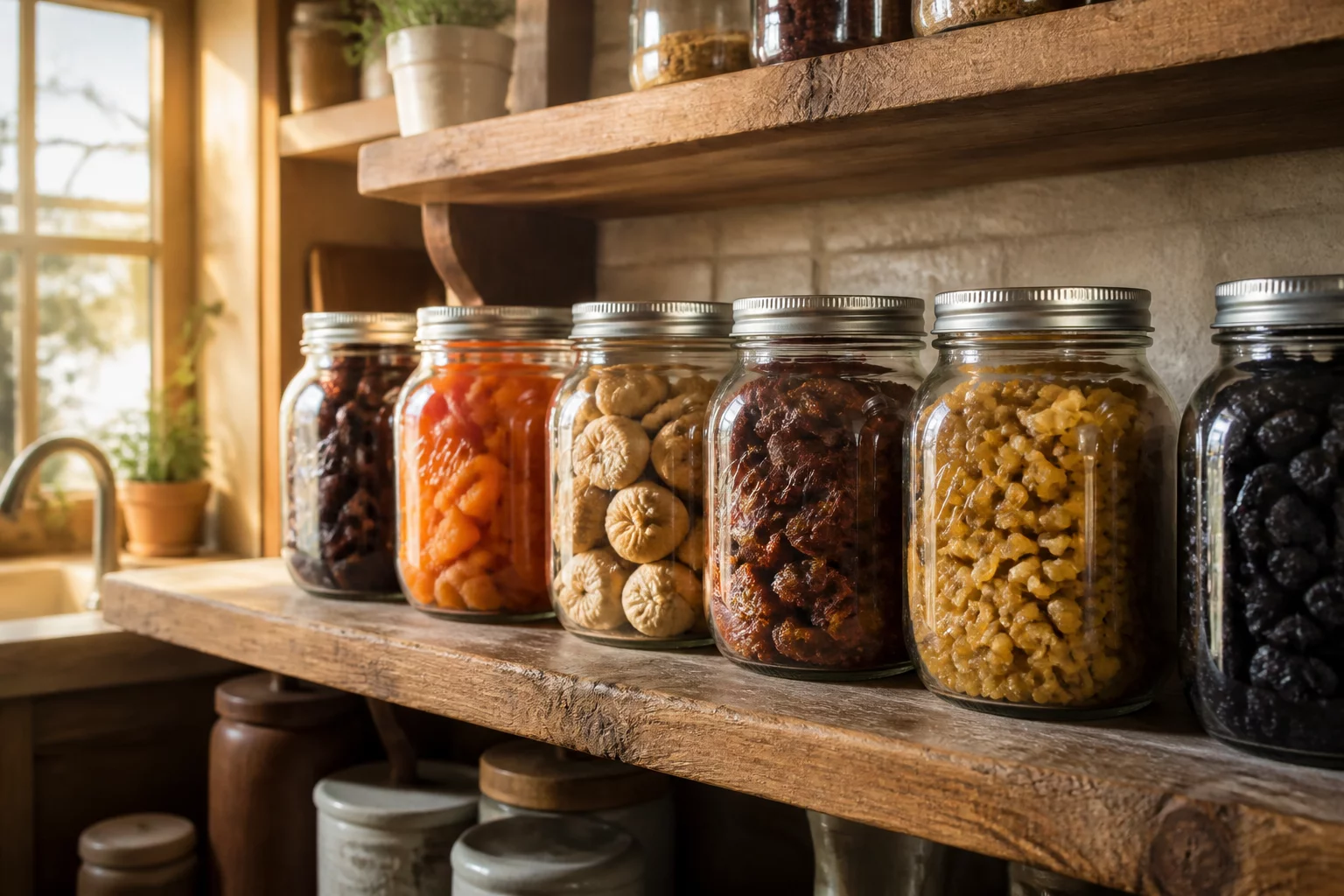
Dried fruits maintain their luscious taste and dense nutritional profile for six to twelve months when sealed inside clean, airtight containers stored in a cool, dark pantry below twenty degrees Celsius. Shielding your supply from oxygen, humidity, and direct sunlight keeps the flesh delightfully chewy rather than leathery or crystalized.
The Fundamental Enemies of Dried Fruit Freshness
Moisture and atmospheric air trigger gradual degradation in dehydrated apricots, raisins, figs, and mango slices. Excess ambient humidity invites airborne mold spores into the package, while continuous air contact prompts oxidative hardening and flavor fading. Natural fruit sugars occasionally migrate to the surface when temperatures fluctuate, creating a harmless powdery white bloom, but proper storage prevents the fruit from drying out into unpalatable hardness.
Step-by-Step Storage Guidelines for Home Pantries
Follow these practical storage habits right after opening commercial bags or finishing a batch of home-dehydrated fruits:
- Select non-reactive airtight containers: Transfer the pieces into heavy glass mason jars with rubber gaskets, food-grade silicone zip pouches, or vacuum-sealed bags. Thin polyethylene grocery bags breathe too easily and permit ambient humidity intrusion.
- Pick a consistently cool pantry spot: Find a shaded cabinet away from steam vents, dishwashers, oven corners, and window sills. Aim for a temperature range between ten and eighteen degrees Celsius.
- Minimize empty headspace in the jar: Fill your containers near the top to reduce the volume of trapped oxygen around the fruit pieces.
- Divide large bulk orders into smaller portions: Keep one active working jar for everyday snacking and leave secondary bulk jars undisturbed to avoid repeatedly introducing warm kitchen air.
Refrigeration and Freezing for Extended Shelf Life
In warm summer climates or humid coastal regions, the refrigerator provides an ideal sanctuary. Stored in tight glass containers inside the crisper drawer, dried fruits effortlessly stay plump and succulent for over a year. Freezing extends preservation up to eighteen months or beyond without compromising structure or sweetness, because dehydrated fruits contain very little water to form destructive ice crystals. Thaw desired portions at room temperature for twenty minutes before eating to restore their tender, natural chewiness.
Spotting Spoilage: What to Watch Out For
Inspect older batches periodically for signs of spoilage. While natural sugar crystallization looks white and rubs off smoothly between your fingertips, mold forms distinct fuzzy spots that indicate immediate disposal. Discard any fruit displaying sour odors, fermentation scent, or sticky discoloration caused by accidental water contamination.
Discussion & Experiences
1 CommentTom
Verified ReaderClear and practical storage advice
Very helpful guide, thanks!